
News
Field service advice needs more than a slide deck
Why our team trained on IFS Advanced Forms with OmniByte before recommending it.

IFS Support
Monday, quarter past eight: MRP is down, a pick list looks wrong and finance cannot post intercompany. Three calls, three departments, one problem: IFS is blocking the day until someone who knows the system picks up.
The standard solution is a service desk where someone writes down your name, assigns a priority, and forwards it to “the right team.” Three business days later you get a callback request. By then your planner solved it manually, your warehouse manager called a colleague, and finance processed the posting by hand.
At Eqeep, there’s no middleman. The people on our service desk are functional and technical IFS specialists. They know the modules. They understand why an MRP run fails when a specific parameter is off. They can reproduce a pick list issue while you’re still on the phone.
Simple questions are resolved on the spot. That sounds like a promise everyone makes. The difference: our people don’t need to escalate to a specialist. They are the specialist. For more complex issues, someone calls you back with a solution. Not with follow-up questions.


Every ticket is logged in our service desk portal. You see what was reported, by whom, what the status is, and what the resolution was. Not just for the current ticket, but for everything ever reported. Over time, you build a knowledge base of your own environment.
Monthly, you receive a report. Not the kind nobody reads, but an overview of the patterns that matter. Which modules generate the most questions. Which users call most frequently. Where structural improvements are possible. We use that data in the periodic management meeting to jointly determine where priorities should be.

Why our team trained on IFS Advanced Forms with OmniByte before recommending it.

AI and predictive maintenance are often mentioned in the same breath. But what does it actually mean in practice? Is…
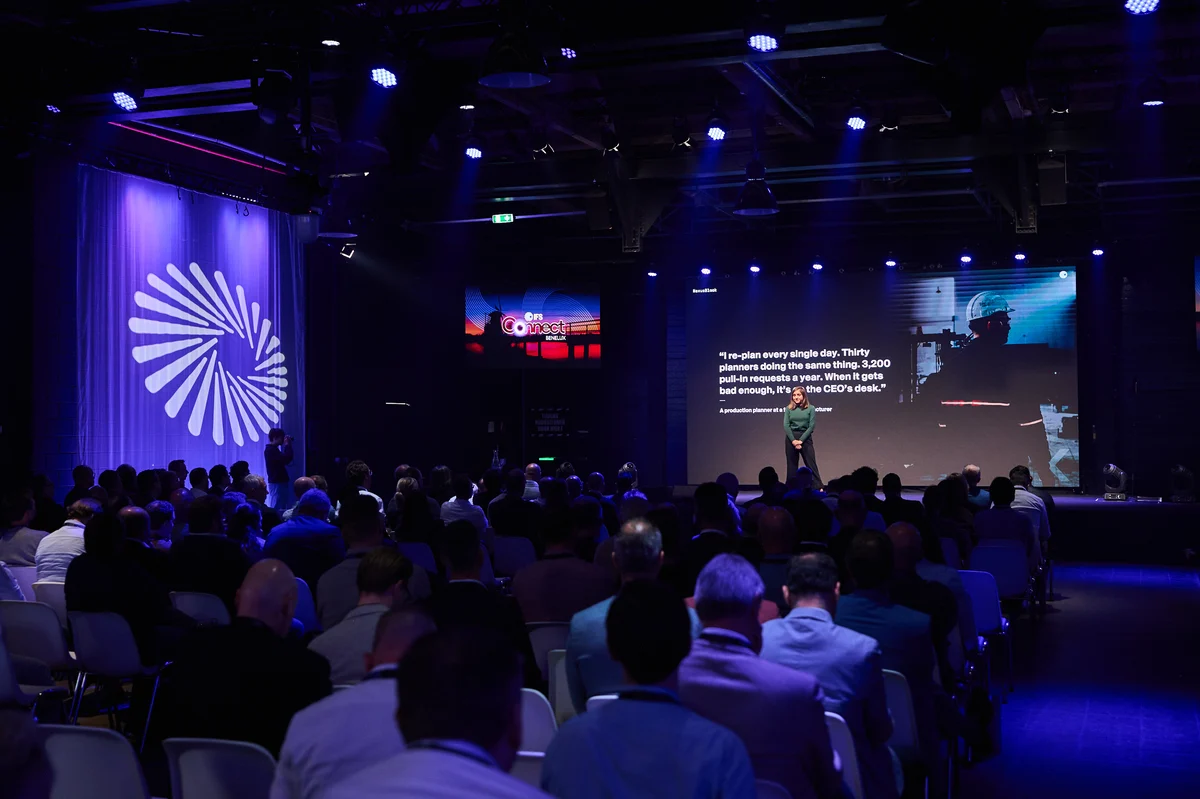
Where does Industrial AI in IFS Cloud stand today, and where is it heading over the next 18 months? That…
Trusted by Industry Leaders







Hosting is the foundation for performance, availability and update rhythm.
Availability, performance, security and clear responsibility. The platform must be stable enough that users only notice it when a decision is needed.
Monitoring can detect and alert. People still decide on escalation, maintenance windows and business impact.
Review it before release updates, peak periods, major integrations or growth in user volume.
If (cloud) hosting is becoming a source of risk, delay or recurring effort, we can help you assess what needs to change in your IFS operating model.
Tell us what is unstable, slow or unclear in your hosting setup. We will help you separate incident, infrastructure and IFS impact.