


Three winners, and what others can take from them
The IFS Awards winners 2026 went to Alliander, SPIE Nederland and Dixstone. Three Benelux organisations that moved Industrial AI from pilot into their work process.
IFS.ai brings Industrial AI to assets, service, planning and maintenance. You decide what AI prepares and what people approve.


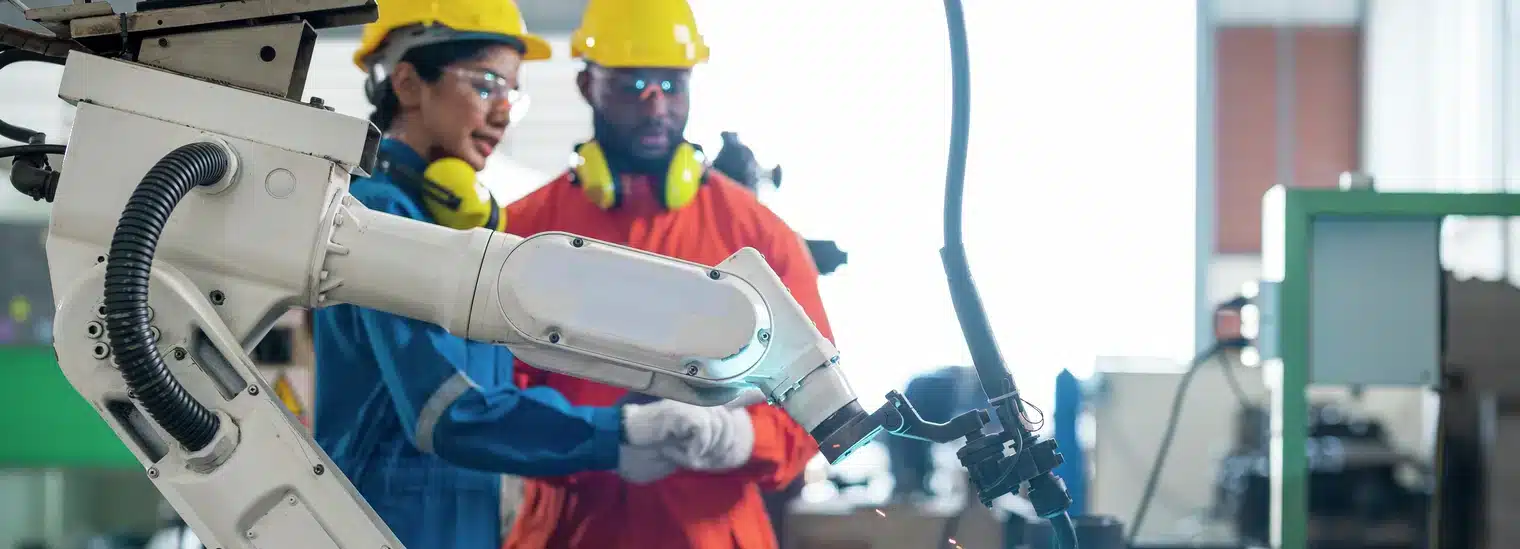
Industrial AI only pays off when it lands in assets, service, planning and maintenance. For a COO or operations director the first question is authority: who may act on an AI recommendation, and which decisions need approval? We help define those rules before automation scales, so IFS.ai signals that may start work automatically are separated from those that need a signature. Eqeep does this as IFS Specialized Partner in the Benelux. See our analysis and design approach.
Planners and purchasers need what-if planning as a weekly habit, not a quarterly exercise. They see the options before the line feels the impact; the aim is a decision you can check, not a perfect forecast. Maintenance and asset managers face the opposite risk: analyses with no follow-through. IFS Cloud connects maintenance, planning, parts and asset history, so a predictive signal becomes scheduled work. Read more on demand forecasting and asset availability.
Service managers want expertise that stays available when the experienced colleague is not in the room. CIOs and IT leads fight data quality, and the ERP underneath is not always IFS. Composable architecture and open APIs can make AI capabilities easier to connect. Integration time depends on the systems, data quality, scope and testing required. In each case people remain accountable for the decision, with an audit trail they can explain. Start with composable ERP.
IFS Industrial AI works inside operational workflows. It can draft, rank, surface context, forecast, optimise and flag exceptions. A person remains responsible for each decision.
Summaries, work-order drafts and service notes come from trusted IFS context.
Signals from assets, service, projects and supply chain arrive as ranked options.
Contextual knowledge: manuals, asset history, agreements and earlier interventions appear when the decision is made.
Model demand, capacity, maintenance windows and service risk first.
Technicians, parts, SLAs, production windows and asset criticality in one plan.
Anomaly detection flags abnormal readings, cost drift and late signals before they turn into downtime or backlog.
The IFS Awards winners 2026 went to Alliander, SPIE Nederland and Dixstone. Three Benelux organisations that moved Industrial AI from pilot into their work process.
Industrial AI only pays off when it lands in assets, service, planning and maintenance. Every step in the chain has an owner. IFS Intelligence, which IFS launched in October 2026, brings its Industrial AI together in Cowork, Loops and Runway.
Signal
Anomaly detection flags abnormal readings, cost drift and late signals while they are still small.
People decide: which signals may start work automatically and which need a signature.
Prepared action
Drafts, ranked options and what-if scenarios start from trusted IFS data. Digital workers take over routine coordination.
People decide: what an agent may prepare and which actions need approval.
Decision
A predictive signal becomes scheduled work in IFS Cloud, with an audit trail people can explain.
People decide: people remain accountable for the decision.



Controlled autonomy: IFS Cloud, IFS.ai and your operating rules decide where a person must approve.
Predicting is step one. Acting is step two. That is where the real value of AI lies.
Process Intelligence turns raw data from your IT systems into a view of how your processes actually run.
Before you start with AI, examine your data: complete, reliable, current and consistent across systems.
IFS Industrial Intelligence uses operational data in IFS Cloud to support daily decisions. Available features and configuration depend on the release and agreement. IFS Loops adds digital workers that can execute defined workflows within governance and audit controls. IFS Nexus Black supports co-creation for problems beyond standard functionality. Deployment time depends on scope, data access, integration and validation; agree a realistic plan for the specific use case.
IFS Intelligence is Industrial AI from IFS for asset- and service-intensive industries, launched on 13 October 2026. It works on operational data in IFS and connected third-party systems and prepares actions that people approve. Cowork, Loops and Runway run under the Industrial AI Harness, which handles identity, permissions, approvals and the audit trail. See IFS Intelligence.
IFS.ai brings Industrial AI into maintenance and asset management. Anomaly detection flags abnormal readings, cost drift and late signals while they are still small, and IFS Cloud connects maintenance, planning, parts and asset history, so a predictive signal becomes scheduled work instead of another dashboard. Our solution architect explains what predictive maintenance needs from your data and processes.
Teams decide which decisions an agent may prepare, which actions need approval and how outcomes are measured. Digital workers remove routine coordination; planners, technicians and managers keep the accountable choices.
Start with one decision that repeats often, uses reliable IFS or asset data and has a measurable operational result. Examples are demand changes, field exceptions, asset risk, work order prioritisation or service margin leakage.
Yes. The route can coexist with the existing ERP environment. Eqeep maps the operating model, data flow and IFS capabilities first, then decides where IFS Cloud, IFS.ai or Nexus Black should carry the work.
No. You need data that is good enough for the first decision. IFS and AI can help improve data quality over time, but the control model, exceptions and ownership must be clear from the start.
The colleague you speak to about AI in your IFS environment.

Solution Architect
Utrecht, Netherlands
Tell us where you stand with IFS. You get one conversation and a clear next step.
Tell us which decision you want AI to support first.