
News
Field service advice needs more than a slide deck
Why our team trained on IFS Advanced Forms with OmniByte before recommending it.

Industry
Only 18% of asset failures are age-related, yet most utilities still replace on fixed cycles, and Pacific Gas and Electric identified $3.7 billion in efficiencies over six years by switching to condition-based planning with IFS Copperleaf.
Utilities do not lack projects; they lack board-ready trade-offs. Replacement cycles, risk scores, condition data and capital limits need to come together before the next transformer, cable or substation decision is made.
Copperleaf makes those scenarios visible and connects them to IFS asset and work data. The platform calculates options and consequences; asset leaders keep the decision on risk, timing and service continuity.
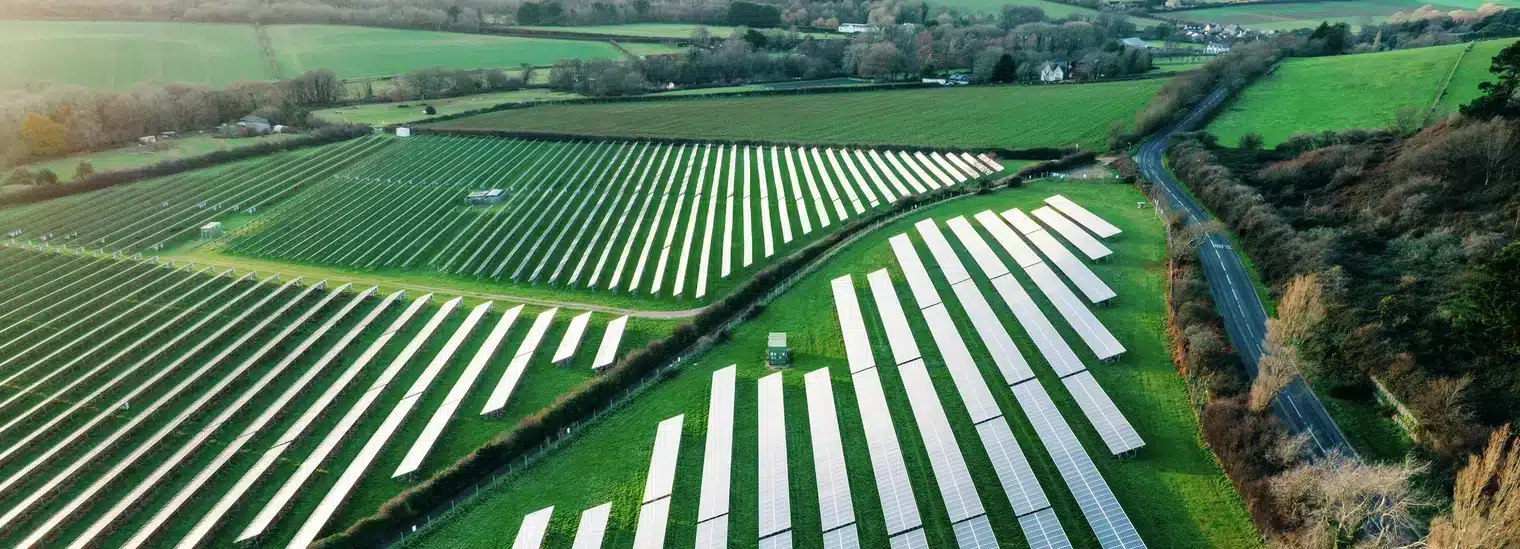

Capital budgets are finite, so utilities need to test where money creates the most value under different futures. Scenario planning compares capital allocation against demand growth, DER uptake, decarbonization paths, and regulatory change. IFS Cloud, extended with Copperleaf where relevant, models these scenarios simultaneously so planners can see which investments stay sound across assumptions. Pacific Gas and Electric identified $3.7 billion in efficiencies over six years through that discipline.

Industry
TotalEnergies: 13,500 users, one IFS Cloud platform for the global operated asset portfolio. The investment decisions follow the data, not the calendar.

For transmission and distribution operators, risk-weighting matters because failure probability alone hides consequence. IFS Cloud calculates risk scores that combine network topology, customer impact, regulatory exposure, and safety implications, so capital moves toward the assets that reduce enterprise risk most. A lower-probability transmission asset can outrank a higher-probability local asset when the consequence gap is wider. That is how planners steer constrained budgets with defensible priorities.
Replacement, risk reduction and growth compete for the same capital. Without one economic scale, the loudest argument wins.
Value-based portfolio optimisation weighs risk, cost and strategy on one scale.
Regulators and boards ask why this investment and not that one. A ranked list without scenarios is not an answer.
What-if scenario modelling shows what moves when budgets, risk appetite or timelines change.
Capital plans made apart from maintenance reality overbuild some assets and starve others.
Asset Investment Planning co-exists with your current EAM and ERP, no rip and replace required.





Why our team trained on IFS Advanced Forms with OmniByte before recommending it.

AI and predictive maintenance are often mentioned in the same breath. But what does it actually mean in practice? Is…
Where does Industrial AI in IFS Cloud stand today, and where is it heading over the next 18 months? That…
Asset investment planning decides which network assets should be replaced, refurbished, or deferred. Condition-based asset investment planning uses sensor data, inspection results, and risk modeling rather than a fixed calendar cycle. With only 18% of asset failures tied to age, calendar-based planning often directs capital to the wrong assets.
Asset investment planning decides which network assets should be replaced, refurbished, or deferred. Condition-based asset investment planning uses sensor data, inspection results, and risk modeling rather than a fixed calendar cycle. With only 18% of asset failures tied to age, calendar-based planning often directs capital to the wrong assets.
Age-based replacement swaps an asset when it reaches a predetermined service life, regardless of its actual state. Condition-based planning assesses each asset individually using health scores, load data, and inspection results, then prioritizes investment where risk and consequence are highest. One method treats assets as identical. The other treats them as evidence.
Utilities use IFS Copperleaf to model capital scenarios, test investment plans against different futures, and prioritize portfolios by value and risk. Pacific Gas and Electric, which invests 10 to 20 billion dollars annually in grid infrastructure, identified 3.7 billion dollars in efficiencies over six years by shifting to bundled, optimized planning with IFS Copperleaf.
An asset investment planning implementation with Eqeep begins with the decision process: how capital decisions are made today, on what evidence, and with what governance. The work then connects condition monitoring to investment planning and configures risk and scenario models for the specific network, operating model, and regulator.
Capital plans need regulatory approval, which means every investment choice has to be defensible. IFS Cloud creates an audit trail from condition assessment through risk calculation to investment recommendation. That traceability shortens approval cycles and reduces the risk of disallowance, which directly affects allowed revenue for transmission and distribution operators.
If your asset investment planning processes are under pressure from complexity, growth, service expectations or data quality, we can help identify the most practical IFS improvement path.
Tell us which investment decisions are hardest to defend. We will help you see how IFS Copperleaf can bring capital planning and asset risk together.